
A generation of women who embraced tanning culture in the 1990s and early 2000s are now facing the long-term effects of cumulative UV exposure — and many are unknowingly carrying an increased risk of skin cancer.
Sunbeds before nights out. Summers abroad spent chasing the perfect tan. SPF reserved for the kids rather than the adults. For a lot of us, that was just what beauty routines looked like back then. The trouble is, skin has been keeping score all along — and the receipts are starting to come in.
The Beauty Habits That Left a Lasting Impact
The World Health Organization classifies sunbeds as a Group 1 carcinogen — the same category as tobacco. Research shows that using a sunbed before the age of 35 increases melanoma risk by 75%. At the same time, UV exposure remains the leading cause of visible skin ageing, responsible for up to 90% of premature ageing signs, including pigmentation, wrinkles, and changes in texture.
“Many women today are incredibly knowledgeable about skincare ingredients and preventative beauty routines. They understand retinoids, antioxidants, barrier repair and SPF. But despite investing heavily in cosmetic skincare, many have never had a professional skin check. Early-stage skin cancers often don’t look dramatic — they can sit quietly alongside completely normal-looking skin for years.”
— Dr Tim Cunliffe, Medical Director, The MOLE Clinic

A Growing Awareness Gap
The MOLE Clinic screens more than 50,000 patients every year across its national network of clinics and assesses over 22,000 skin lesions annually. According to clinic data, 58% of patients attending a routine full body skin check are found to have at least one lesion requiring monitoring or further investigation.
The areas most commonly affected by cumulative UV exposure include the face, shoulders, back, and décolletage — areas frequently exposed throughout life but difficult to self-monitor. Clinicians regularly identify:
- Actinic keratoses caused by cumulative sun damage
- Changing or irregular moles
- Basal cell carcinomas
- Early-stage melanoma
The average age of patients attending for a skin check is 47, with many of them saying the same thing: I wish I’d come sooner.
“Melanoma caught at Stage 1 has a survival rate of over 95%, but outcomes change dramatically once diagnosis is delayed. In many cases, the difference comes down to one thing: whether somebody looked properly, and early enough.”
— Dr Tim Cunliffe, Medical Director, The MOLE Clinic
Skincare and Skin Health Go Hand in Hand
Daily SPF use, retinoids, antioxidants such as Vitamin C and niacinamide, and skin barrier protection all play an important role — not only in slowing visible ageing, but in reducing cumulative UV damage. It’s a positive shift, and one worth building on.
But skincare alone can’t replace a professional examination. A full-body skin check involves a specialist nurse systematically examining the skin using dermoscopy — magnification and specialist lighting that allows lesions to be assessed in far greater detail than the naked eye can manage. The process typically takes around 40 minutes and is designed to provide reassurance, education, and early detection where needed.
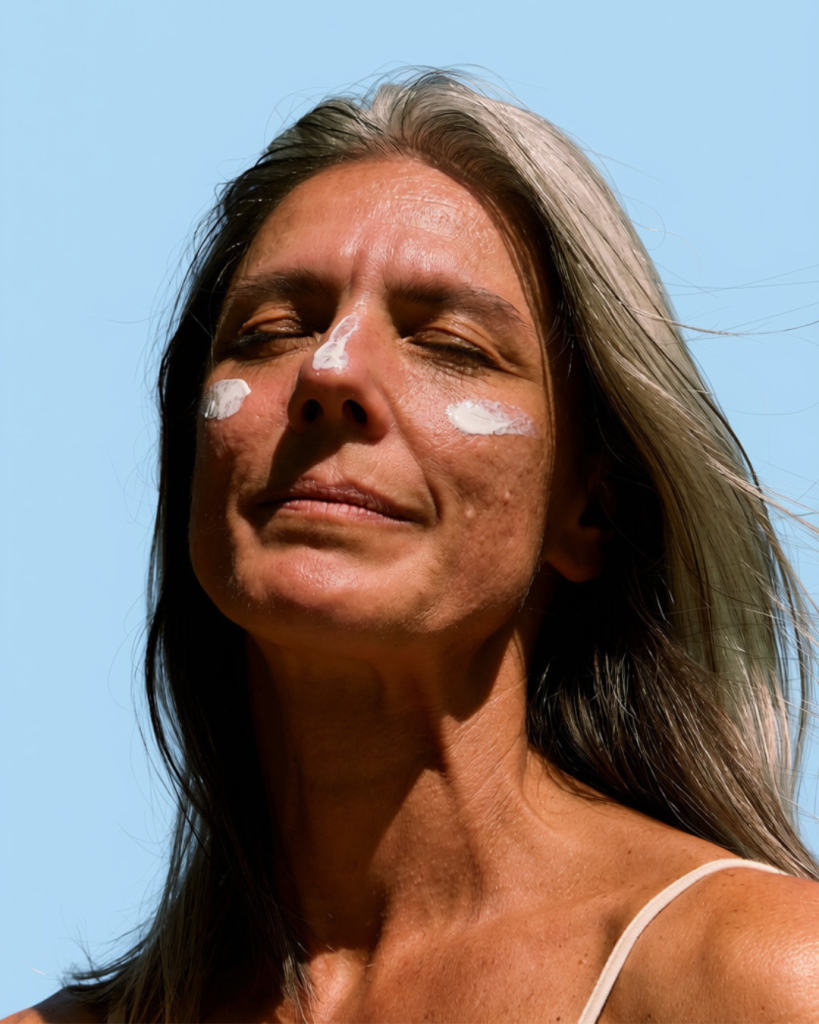
Should You Book a Skin Check?
We recommend that any woman in her 40s or 50s — particularly those who grew up with regular sun or sunbed exposure — books an annual full-body skin check. This is especially important if you:
- Used sunbeds regularly before the age of 35
- Have had frequent sunburn, or spent significant time in the sun without SPF
- Have fair skin, light eyes, or a family history of skin cancer
- Have noticed any new or changing moles, lesions, or patches of skin

Book Your Skin Check
At The MOLE Clinic, our dermatology-trained clinicians carry out thorough, expert skin assessments using the latest dermoscopy technology. Appointments are available across our UK clinics, with no GP referral needed. Book a professional skin check today.
We earned this skin. Now let’s look after it.
The MOLE Clinic is one of the UK’s leading skin cancer screening providers, specialising in the early detection of skin cancer through advanced imaging technology and expert clinical assessment.