
Most moles on the palms, soles and nails are harmless. However, skin in these areas behaves differently so it pays to know which changes deserve a closer look.
Our nurses recently had a teaching session on moles in these areas, called “acral” sites, with our Medical Director, Dr Tim Cunliffe. This post shares the key points so you know what is normal and when to book a check.
Why hands, feet and nails are different
The skin on your palms and soles is thick and covered in fine ridges, like a fingerprint. Because of that, moles here often look striped or lined rather than round and blotchy.
Melanoma in these areas is uncommon. It affects people of all skin types at similar rates, but it is the most common type of melanoma in people with darker skin, because other types are rarer for them. The reggae musician Bob Marley died in 1981 from a melanoma that started under a toenail. It is a reminder that these areas are easy to overlook.
What a typical harmless mole looks like
A harmless mole on the hand or foot usually has these features:
- Small: most are under 6 mm across, about the width of a pencil.
- Flat and even: usually one colour, or a darker centre that fades towards the edge.
- Neat and orderly: a clear border, with the same pattern all the way across.
- Fine lines: under a magnifier, the pigment sits in thin lines along the grooves of the skin.
- Stable: it has not grown or changed.
Pressure from walking can smudge the pattern on the sole, and friction between the toes can give a mole a greyish tint. Neither is a worry on its own.
Not every dark mark is a mole, either. A small black or reddish patch on the heel or sole is often a tiny bleed under thick skin, sometimes called “black heel”. It can appear after sport or tight shoes, and many people don’t remember an injury.
Warning signs on the palms and soles
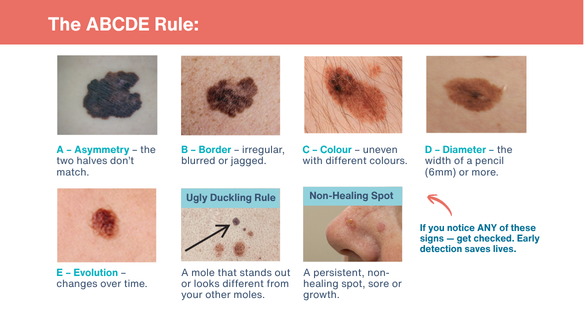
Dr Cunliffe advises getting any mole checked out on the palms and soles with any of the following:
- is larger than 6 mm, and especially if it is over 1 cm
- has more than one colour, or patchy shades of brown, black, blue, grey or red
- looks blotchy, smudged or uneven, with a blurry or irregular edge
- is new or changing in adulthood, particularly after middle age
That last point is sometimes called the EFG rule: a mole that is Elevated, Firm and Growing should always be checked. Some melanomas have little or no colour and can look like a pink lump or a sore that won’t heal.
Moles on the soles can be hard to see, so you may not notice them changing. Ask someone to look or take a photo every few months to compare.
Dark lines and marks in the nails
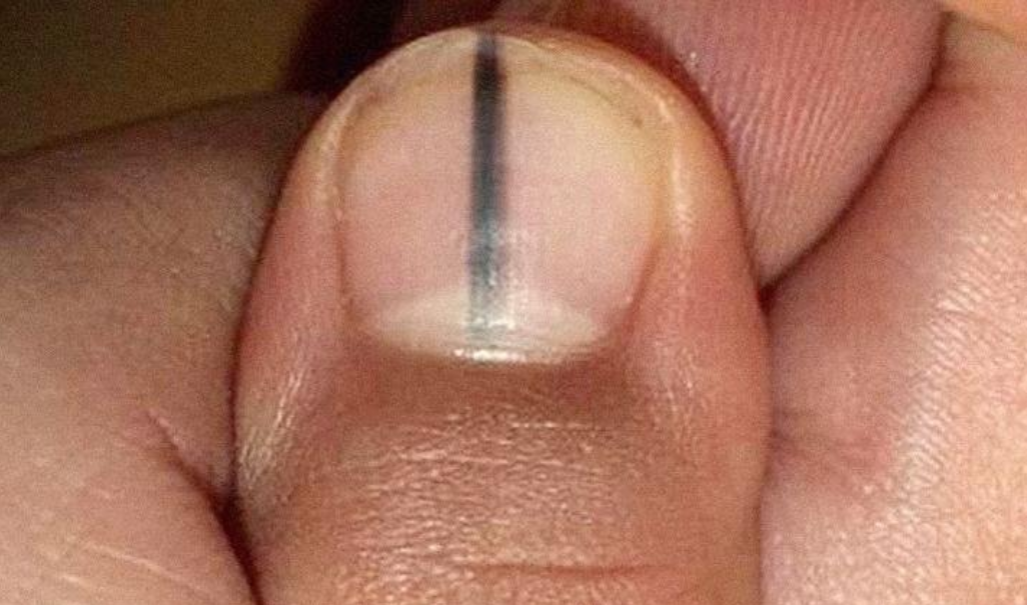
Most dark marks in a nail are a bruise (a bleed under the nail). Nail melanoma is rare. When it happens, it can affect any nail, although most commonly the thumbnail or big toenail.
Nail melanoma usually starts where the nail grows from, at the base. The growing nail carries the colour forward, so it shows up as a stripe /line running the length of the nail. It tends to grow very slowly.
| More likely a bruise | Get it checked | |
|---|---|---|
| Shape | Rounded or curved edge, not a straight stripe/line | A straight stripe, or one wider at the base than the tip |
| Over time | Grows out with the nail, leaving clear nail behind it | Stays in place, or gets wider |
| Colour | Red, purple or black, often with additional scattered spots or blobs | A stripe / line growing down a nail – this may be one or more colours |
| Nails affected | Often after an injury, though many people don’t recall one | Usually just one nail |
| Surrounding skin | Normal | Colour spreading onto the skin around the nail is a late sign of cancer |
| Nail itself | Intact | Splitting, lifting, bleeding or breaking down |
Similar looking stripes/lines affecting several nails are common in darker skin types and are usually harmless.
How we check moles on hands, feet and nails
At your appointment, a nurse examines the mole with a dermatoscope. This is a handheld magnifier with a special light that shows the pattern beneath the skin’s surface. It is quick and non-invasive.
If a mole looks harmless, you are reassured and can go. If it is small and even but not completely clear-cut, we may photograph it and compare in three months. Nail changes grow slowly, so a three month review is often sensible for a faint, even line. If anything looks concerning, we will recommend referral so it can be assessed further or removed and tested.
When to book a check
Book a mole check if you notice any of these on your hands, feet or nails:
- A new mole in adulthood, or one that is growing or changing
- A mole over 6 mm in diameter
- A blotchy looking mole, or one with several colours/shades of colour
- Any lump that is raised, firm and growing, even if it has little colour
- A new stripe/line in one nail, especially if it is widening, dark or multi-coloured
- Colour spreading onto the skin around a nail, or a nail that is breaking down
You don’t need to wait until you are sure something is wrong. Most of the moles we check on hands and feet turn out to be harmless, and peace of mind is a good reason to come in.
Book a mole check with The Mole Clinic
This article is general information and not a diagnosis. If you are worried about a mole or a nail, see a healthcare professional.